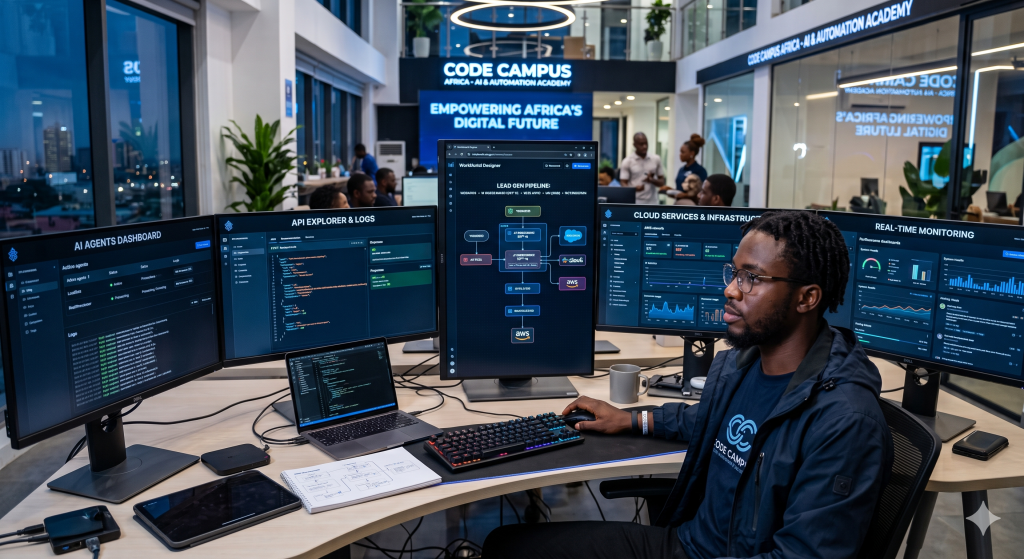

Artificial Intelligence is one of the most discussed technologies in the world today. From AI-powered chatbots and virtual assistants to automated business processes and self-learning systems, AI is transforming how organizations operate.
As AI adoption continues to grow, many people are asking an important question:
Is Artificial Intelligence replacing jobs?
The answer is both yes and no.
While AI is automating certain tasks and changing some job roles, it is also creating entirely new career opportunities. Understanding how AI is reshaping the workplace can help individuals prepare for the future and remain competitive in an evolving job market.
Why People Are Concerned About AI
AI systems can perform tasks that once required human effort.
Examples include:
Data processing
Customer support automation
Content generation
Image analysis
Report generation
Administrative tasks
As AI becomes more capable, many workers worry that their jobs may eventually become obsolete.
However, history shows that technological advancements often change jobs rather than eliminate work entirely.
Jobs Most Likely to Be Affected by AI
AI is particularly effective at handling repetitive and predictable tasks.
Examples include:
Data entry
Basic administrative work
Routine customer support
Simple content creation
Basic bookkeeping
Workers in highly repetitive roles may see significant changes as AI adoption increases.
Jobs That Are Growing Because of AI
At the same time, AI is creating demand for new skills and new professions.
Examples include:
AI Engineers
Machine Learning Engineers
Data Analysts
Data Scientists
AI Automation Specialists
Cloud Engineers
Cybersecurity Professionals
Organizations need skilled professionals who can develop, manage, and improve AI systems.
AI Is Changing Jobs More Than Replacing Them
In many industries, AI acts as a productivity tool rather than a replacement for workers.
For example:
Marketers use AI to create content faster.
Developers use AI coding assistants.
Designers use AI-powered creative tools.
Analysts use AI to process large datasets.
In these cases, AI helps professionals become more productive rather than making them unnecessary.
The Skills That Will Remain Valuable
As AI becomes more common, certain human skills become even more important.
These include:
Problem-solving
Critical thinking
Communication
Creativity
Leadership
Collaboration
Professionals who combine technical skills with strong human skills are likely to remain highly valuable.
How Students Can Prepare for an AI-Powered Future
Rather than fearing AI, students should focus on learning how to work with it.
Practical steps include:
Learning programming
Understanding AI fundamentals
Building digital skills
Developing problem-solving abilities
Learning how to use AI tools effectively
Those who adapt quickly will be better positioned for future opportunities.
Why AI Literacy Matters
AI literacy is becoming as important as digital literacy.
Understanding how AI works allows individuals to:
Use AI responsibly
Improve productivity
Evaluate AI-generated content
Make informed decisions
Identify new career opportunities
AI knowledge is increasingly valuable across industries.
The Future of Work
The future workplace will likely involve collaboration between humans and AI systems.
Organizations will continue using AI to automate repetitive tasks, while people focus on higher-value activities such as strategy, creativity, decision-making, and innovation.
The individuals who thrive will be those who learn how to leverage AI rather than compete against it.
Final Thoughts
Artificial Intelligence is changing the workplace, but it is not simply replacing all jobs.
While some tasks are becoming automated, new opportunities are emerging for individuals with the right skills.
The best strategy is not to fear AI but to learn how to use it effectively. By developing technical skills, problem-solving abilities, and AI literacy, individuals can position themselves for success in the future of work.
Frequently Asked Questions
Which jobs are most vulnerable to AI automation?
Jobs involving repetitive and predictable tasks are generally more vulnerable to automation.
Will AI completely replace human workers?
No. Most experts expect AI to change how people work rather than eliminate human workers entirely.
What careers are growing because of AI?
AI Engineering, Data Science, AI Automation, Cybersecurity, and Cloud Computing are among the fastest-growing fields.
How can students prepare for AI-related careers?
Students can learn programming, AI fundamentals, digital skills, and practical problem-solving techniques.
Is AI a threat or an opportunity?
For most people, AI is an opportunity to improve productivity and develop new skills that are in demand.